How to Negotiate the Price of a Used Scooter
Buying a used scooter can save you thousands of ringgit, but only if you know how to negotiate. This guide reveals the insider secrets to scoring a fair price, from decoding market rates to spotting deal-breakers, tailored for the Malaysian second-hand market.
Research the Market Value Before You Talk Price
The single most powerful move you can make before negotiating is to know exactly what the scooter is worth. If you walk into a viewing with a solid grasp of market prices, you instantly shift the balance in your favour.
Start by scanning Mudah.my and Carlist.my for models matching the year, brand, and rough mileage you’re eyeing. Don’t ignore Malaysian scooter Facebook groups—sellers often post there first with more flexible pricing. For a Yamaha NMAX or Honda RS150, you’ll quickly spot a price cluster. Mileage under 20,000 km commands a premium; anything past 50,000 km should pull the price down noticeably. Condition matters just as much—scratched panels or a tired seat are bargaining chips, not deal-breakers. If the scooter has a Singapore COE, factor in the remaining validity; a short COE can knock thousands off the typical asking price.
Regional price gaps are real. Scooters in the Klang Valley almost always sit at the top of the range—convenience and demand push numbers up. In smaller towns like Alor Setar or Kuala Terengganu, the same machine can go for 10–15% less because the local market is thinner. Use this to your advantage: if you’re willing to travel, you can find better deals outside the city.
Before you go see any scooter, make a simple cheat sheet. Jot down three numbers: the lowest realistic online price, the average, and the highest anyone is actually getting. Bring that list. When the seller names a figure, you won’t be guessing—you’ll know immediately whether you’re in fair territory or getting pulled into a losing haggle.
Inspect the Scooter Like a Pro to Find Bargaining Chips
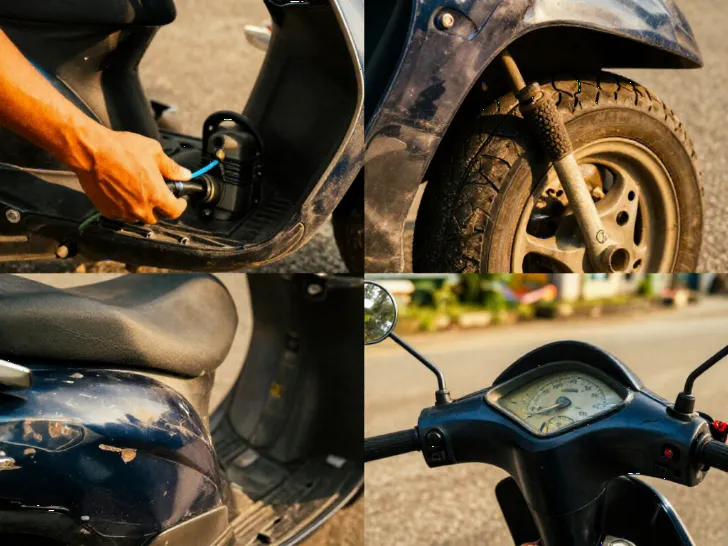
A seller who knows you've done your homework is far less likely to cling to an inflated price. Every flaw you uncover is a bargaining chip, so approach the inspection like a detective. Don't rush; even a ten-minute walk-around can reveal whether the scooter has been loved or neglected.
Start the engine from cold—if the seller has warmed it up beforehand, be suspicious. A healthy engine should idle smoothly without hunting or knocking. Look for blue or white smoke from the exhaust, a telltale sign of worn piston rings or valve seals. Run your finger inside the exhaust tip; a dry, grey residue is normal, but sticky black soot or oily gunk indicates rich running or oil burning. Check around the cylinder head and oil drain plug for fresh leaks; oil seeping from a blown gasket isn't cheap to fix. Move on to the bodywork: run your eyes along the panels and under the floorboard for deep scratches, dents, or mismatched paint. A bent handlebar, scratched bar-end weight, or replaced mirror often point to a slide or low-speed drop. Check the frame near the steering head for any crack or weld repair—a serious accident can twist the chassis, rendering the scooter unsafe.
A test ride tells you what a visual check can't. Before you ride, press the brakes hard: a spongy lever might just need bleeding, but if it sinks to the bar, you're looking at a master cylinder rebuild. On older scooters, the continuously variable transmission (CVT) is a common failure point. Accelerate from a standstill; if the scooter hesitates, shudders, or emits a metallic grinding, the belt, rollers, or clutch shoes are likely worn. Crouched near the rear wheel, you might also hear a dry bearing rumble from the final drive. During the ride, test the suspension over bumps—a crashy ride or oil residue on the fork stanchions means seals are gone. Finally, even if the scooter passes a mechanical exam, never skip the documents. Ask for the original vehicle grant (VOC), a valid road tax, and if the scooter is more than five years old, a recent Puspakom inspection report. A missing grant or an expired road tax isn't just a bargaining chip; it's your cue to walk away.
Timing and Psychology: When and How to Make Your Offer
The timing of your approach can be a quiet but powerful advantage. Visit the seller near the end of the month—many people face bills or loan payments at that time and just want to move the scooter fast. Rainy season is another hidden opportunity: fewer buyers are out shopping, and a seller who has been waiting for calls might be more willing to accept a reasonable offer rather than keep holding on.
When you finally put a number on the table, make it one you can justify. Start with a discount of 15 to 20 percent off the asking price, but always tie it to the research you’ve done and the issues you spotted during the inspection—worn tyres, a rusty exhaust, or a scratched panel are fair grounds for adjusting the price. Deliver your offer calmly and then stop talking. That pause does the heavy lifting; many sellers feel compelled to fill the silence by justifying their own number or nudging the price your way.
If you’re paying in cash, say so upfront. Private sellers often prefer the certainty of immediate, full payment over waiting for a bank transfer or loan approval. It’s not a bluff—it’s a genuine reason for them to accept a slightly lower figure and close the deal on the spot.
Handling Common Seller Pushbacks in the Malaysian Market
When a seller says "I have other interested buyers," they're often testing your urgency. Politely ask for a deadline—say, by the end of the day—and reaffirm that you have cash ready. If they pressure you, be willing to walk away; there are plenty of other scooters on Mudah.my and Carlist.my.
Many sellers try to hype a scooter as a "special edition" or limited model. Verify any claim with quick online research—check official Honda, Yamaha, or other Malaysian distributor records. Aftermarket mods like a racing exhaust or custom wrap rarely add resale value, so don't let them inflate the price.
When the price is stubbornly fixed, shift the conversation. Instead of haggling further on the number, negotiate for extras: a good helmet, a rear box, or free servicing for three months can add real value. Finally, gently remind the seller of the rising cost of living in Malaysia and share your researched market comparables. By showing you know the going rate, you reinforce that your offer is fair—not just a lowball.
Closing the Deal Securely: Paperwork and Payment Tips
The moment you agree on a number, lock it down well. A fair final price includes the JPJ name-change fee—clarify this upfront so there are no last-minute surprises. If the seller hesitates to cover it, factor that cost into your offer and make the deduction obvious in writing.
Never hand over the full sum before you hold all signed paperwork. For cash payments, arrange to meet at a police station or a busy bank lobby; it deters dishonesty and gives both parties peace of mind. A simple sale and purchase agreement, even one typed out from an online template and signed by both sides, stops later disputes about the condition or price. Jot down the scooter’s plate number, chassis number, and the actual amount paid.
The cleanest way is completing the transfer together at a JPJ counter. If that is not possible, insist on a completed and signed Borang TM-1 along with clear copies of the seller’s MyKad (front and back). Without these, ownership remains legally with the seller, no matter what you paid. A rushed handover is a red flag—if the seller refuses proper documentation, walk away and find another deal.
FAQ
What is the best day to negotiate a used scooter price in Malaysia?
The best day is typically Sunday, when many informal motorcycle markets are open and sellers are eager to close deals before the new week. Sunday markets like those in Sungai Buloh or Kajang often have larger crowds, and sellers may be more flexible to secure a sale. Avoid major public holidays when demand spikes and pushing for discounts is harder.
How much can I realistically knock off the asking price of a used scooter?
You can realistically aim for 10–15% off the asking price for a well-maintained scooter with complete documents. If there are visible issues like worn tyres or expired road tax, you might negotiate a larger reduction. Keen sellers who need quick cash may accept up to 20% below asking, but extreme lowballs risk losing the deal.
Should I mention that I'm paying cash when negotiating?
Yes, mentioning cash payment can strengthen your bargaining position because sellers prefer immediate, hassle-free transactions. Dealers and private sellers appreciate cash to avoid payment delays; you can use it as leverage to request a small discount. However, always get a signed purchase receipt and ensure the transfer process is followed regardless of payment method.
What documents must a seller provide for a used scooter in Malaysia?
The seller must provide the original vehicle registration card (geran/grant), a copy of their MyKad, the latest insurance cover note, and a completed ownership transfer form (JPJ K3). A Puspakom inspection report may be required if the scooter is over a certain age before transfer. Verify all chassis and engine numbers match the registration card to avoid stolen bikes.
Is it better to buy from a dealer or a private seller when negotiating?
Private sellers usually offer more room for negotiation because they don't have overhead costs like dealers do. Dealers may provide warranty and after-sales service, but their margins are often firmer. With private sellers, you can negotiate directly and avoid dealer markups, but always conduct due diligence on the scooter's history.